


| City/Town: • Clinton |
| Location Class: • Hospital |
| Built: • 1922 | Abandoned: • 1972 |
| Status: • Abandoned • Restored • Private Property |
| Photojournalist: • Michael Schwarz |
History of the Campus
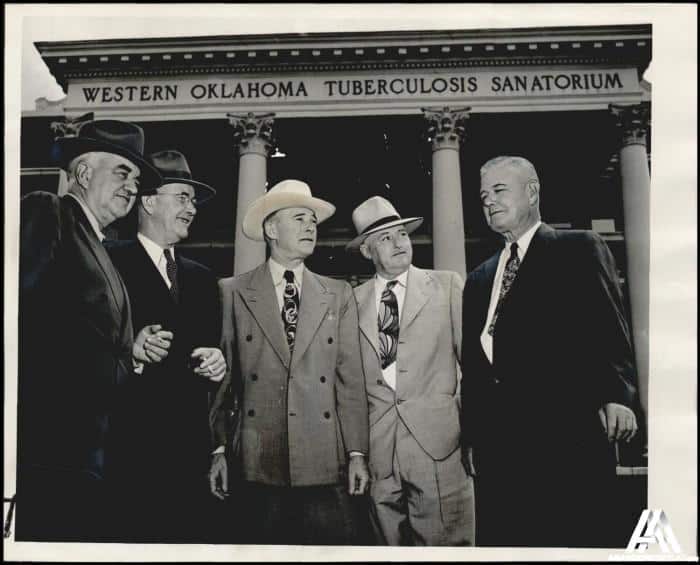
The history of Western Oklahoma Tuberculosis Sanitorium goes all the way back to 1919. Legislation was passed under the administration of J.B.A. Robertson. The Clinton Chamber of Commerce paid $10,000 for the site and gave it to the State of Oklahoma for the establishment of WOTS. An initial $100,000 was appropriated for the erection of the first buildings. At the time, around 3,000 people died annually from what news outlets were referring to as the White Plague. Around 40,000 cases were actively needing treatment at the time and petitions began to spread “call your state legislators!” to offer their support of a state tuberculosis institution.
Their pleas were answered when Clinton was to be the new headquarters of the Western Oklahoma Tuberculosis Sanitorium. Contracts were awarded to the Manhattan Construction company for the work while Ed J. Peters and A.M. Jenkins served as the architects.
The first superintendent of the facility was Dr. J.T. McLaughlin. Once state health commissioners signed off on the buildings, patients would begin their stays in mid-1922. All in all it cost around $300,000 for the first phase of construction.
By the 1930s, the death rate of tuberculosis was 1/5th of what it was 50 years prior. Most of the deaths, according to the data provided from that time,e were those of poorer communities that became malnourished or could not afford a hospital stay. The state institutions gave them a second chance.
Upon the arrival of K.D. Turner, as the new Superintendent in 1943, the entire campus underwent a facelift. Rooms were redecorated and painted, and so were wards and entire buildings. Landscaping projects were underway and around 850 new trees were planted as a symbol of a new chapter and new energy being brought to the Western Oklahoma Tuberculosis Sanitorium. There were 161 white patients and 86 Black patients recorded during this time.
Despite the declining numbers and use of the state facilities, a new addition was dedicated in 1951 for the TB Sanitorium. It was around this era that surgical intervention on advanced cases of TB proved to be helpful.
Decades passed, and with the creation of the Tuberculosis Vaccination, numbers and deaths declined drastically. Leaving many of the buildings on the campus scarcely populated and the need for it diminished. Closure of the campus was announced in March 1972; headlines read “TB Sanitorium Closing Marks End of An Era.”
At one point in its history, the 250 beds were always filled, and a lengthy waiting list right behind it ready to fill any open beds. One former patient of the sanitarium described that most times in the early ages of its history the sanitorium was a place most went to pass on. She was the lone survivor of the 29 people on her ward.
With the closing of the hospital as a treatment center for TB, it became a nursing home instead. This new venture was operated and overseen by the State War Veterans Commission. For the last 50 years this has been the new life of the campus. Serving veterans all over the state but even now the campus faces difficulties. Upon our tour, the security guard said many of the old buildings are to come down soon and discussions of closing the Western campus down entirely and consolidating it with the Eastern campus grow more every day.
South Ward Building (Colored Division)
Built: 1925/1930 Status: Abandoned
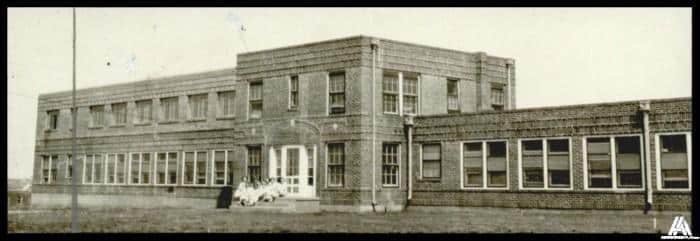
The Western Oklahoma Tuberculosis Sanitorium South Ward, shown above, was a part of the 1925 expansion. The contract of $30,000 was awarded to the Mann Company. They would also be responsible for building a new superintendent’s home and a heating plant. All work was to be rushed; excavations for the South Ward began in August. The South Ward was the segregated colored ward of the campus where all African American patients were cared for.
In 1930, the second story of one of the wings of South Ward was completed. Before this, the building was symmetrical on both sides, but not anymore. This new addition was done by Pankersley Contractors. Between this new addition and a few others happening on different buildings on the campus, 75 new beds were added, bringing the total capacity of the sanitorium to 225.
Even though this was known as the colored ward, consistent overcrowding often meant that it became an overflow unit as well. Before the additions of other buildings were finished, 28 white men were housed here in 1937. This wasn’t the first or last occurrence of this in the South Ward.
A large snowstorm in 1938 left the campus essentially shut down. All motor vehicle traffic was halted, and mail service was stopped. Food to the South Ward had to be delivered on foot and horseback. “Pop” Anderson and his crew did the necessary work to ensure that life continued on and roads would be cleared.
Below is a catalog of different stories from the patients and staff located in South Ward that were shared in WOTS month publication The Conqueror. Patient John Harper, located in this ward, was responsible for drawing and lettering The Conqueror’s advertisements. A testament to how helpful patients were to the staff during their stays.


South Ward underwent a $50,000 renovation in 1952, as an excerpt of The Conqueror said, ” If anyone wants some points on how to get moved in a hurry, just ask the orderlies. They were asked to vacate the old South Ward barracks so they could get on with the repair work. In about an hour, all the boys had moved out. The farmhouse barracks are overflowing. Packed like sardines, but they will have nice living quarters when they get to move back. That is what they are looking forward to now.” The renovation would also provide more employee housing, its around this time the name of the building was changed to South Apartments.
Nurses Home
Built: 1932 Status: Abandoned
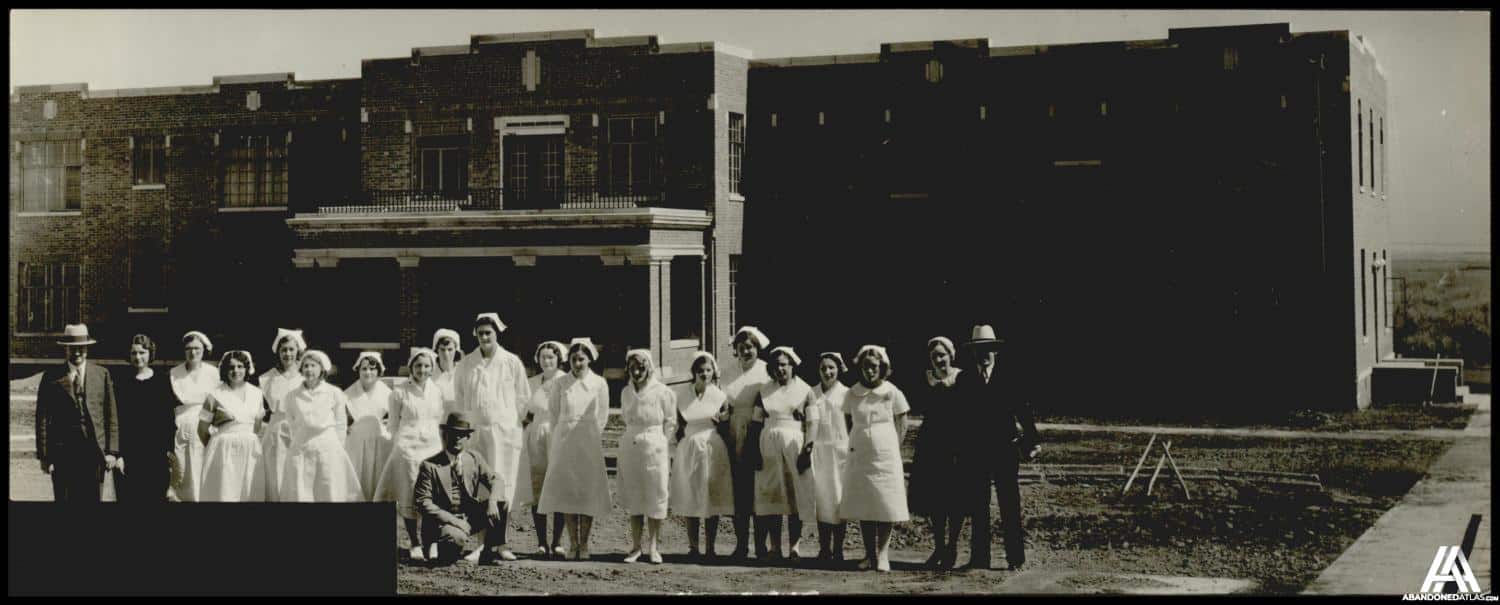
The expansion of the Western Oklahoma Tuberculosis Sanitorium called for the addition of a new wing and a new nurses’ home. Upon our tour of the property, the groundskeeper told us that this building was for the White nurses only.
Well-known architects Layton, Hicks and Forsythe were given the project. Tankersley Construction Co. was awarded the contract for the new home. Local labor and materials were used to construct it in the fall of 1931. A team of around eight men was put in charge of hauling all the equipment and materials to the site so that work could start. When construction started, the team grew somewhere between 20 and 40 men.
Work back then seemed to go much quicker than these days; the building was complete and furnished in just four months’ time. The building would consist of twenty bedrooms and would house up to 32 nurses. Bathrooms and a kitchenette were put between every two bedrooms. The lobby was to be 19 by 26 feet. Made of reinforced concrete and brick veneer, it has withstood the test of time, just short of its centennial.
But not everything went smoothly. Billie Miller, a young man working in the basement of the building, was electrocuted, rendering him unconscious. A live wire of the temporary lighting system being used came into contact with a pipe that Miller was standing on, sending 110 volts of electricity through his body. After being unconscious for about 20 minutes, he recovered with no lasting effects and returned to work as normal.
Dedication of the Nurses Home was held on March 25, 1932, with hundreds of state health officials and workers turning out. Citizens from Clinton and the surrounding areas were able to walk through the new buildings from 1:30 pm to 5:30 pm. A program was then held in the new auditorium, with the musical number being held under the direction of Mrs. Bob Waters, including members of the CHS Orchestra.


Dairy Barn
Built: ~1922 Status: Abandoned
Most state-run institutions had their own farms on the grounds. Some examples of this are facilities like the Pauls Valley State School, the Eastern Oklahoma Tuberculosis Sanitorium, and the Fort Sill Indian Boarding School. These farms gave all persons and the grounds of these facilities a way to learn new skills, contribute to the well-being of their inner community and offset the costs of the facility.
While the official built date of the dairy barn that remains on the Western Oklahoma Tuberculosis Sanitarium isn’t solidified, an appropriation of $104,000 was given to WOTS for the construction of a dairy barn, two ward buildings, and a second-story addition, as well as updating utilities.
A detailed account of the day-to-day dairy operations is documented in the monthly publication called The Conqueror.
At 3 am, John Williams and Albert (Ab) Shelton hear an extremely distracting sound of the alarm clock. Into their clothes and down to the dairy they stagger. Now comes the necessary details which must be exact to assure clean milk not cleaned milk.
The pasteurized is first of all flushed with fifty or sixty gallons of water containing a strong bactericide, all milking machines and cups are removed from their brackets and immersed in a similar solution. Grain is then weighed out individually per cow and placed in the trough. It is then 3:45 am and the cows in the pasture are roused from their sleep and driven into the barn. It is amazing to watch each cow knowingly enter their own stalls.
It then takes Williams and Shelton approximately 50 minutes to milk the 37 cows. Each of them use two surge milkers in a systematic manner. Each cow is treated as an individual and the cows are creatures of habit. Any change, however slight, will affect the amount given. Therefore, quiet, speedy methods are a must.
After milking, the milk is brought into the milk house and placed into the pasteurizer. This milk is pasteurized to 142 degrees and held to that temperature for 30 minutes. During the time the milk is being pasteurized the barn is being scrubbed, calves fed, milkers, buckets and all utensils used in milking washed and sterilized and the bottling machine set up. Then it is time to cool the milk. When the 142 degrees has been held and recorded for one-half hour, the milk is then cooled rapidly to 130 degrees and then run over a cooler which again drops the temperature of the milk to 48 degrees. From the pasteurizer, the milk runs into the bottling machine.
It is now about 6am. Some of the folks in bed have completed their first dream and are starting their heaviest snoozing. Ab and John now start the bottling. 1200-1/2 pints of milk are bottled in an hour. Each bottle is fed into the machine by hand and inspected as closely as possible. Occasionally, a bottle speckled or spotted is unobserved, but 1200 bottles without modern equipment is quite a few,w and the small percentage of soiled bottles that do pass on is amazing.
After all the milk is bottled and the remaining milk in the pasteurizer is separated, all equipment is flushed with water, and these men are ready for a powerful mess of Mongold-fried ‘aiggs’ and ‘howg’.
From breakfast, it is a matter of clean, clean and cleaner of every piece of material, all utensils, floors and walls of the milk house and barn. At 10:30 am again the same procedure is started for the noon milking. After the noon milking, these men clean up everything and cool the milk then drag themselves home to dream of getting some sleep. It is now 1:45 pm.
At noon Bill Woods, dairyman in charge, and Jerry Brickner evening dairyman, report to work. Woods checks all records of the cows, does all the breeding, records all the milk records, figures out what profit is made monthly etc.
Together, Woods and Brickner keep the barn and milkhouse in tip-top shape. They put out hay for the cows, keep all the cow lots clean, and in the evening prior to 8 pm milking, they wash all the bottles into a sparkling condition. The bottle-washing machine being used is obsolete, but after they are run through this machine the bottles are then inspected and any suspicious-looking bottles are then washed by hand.
At 8 pm they are all set up for milking, using the same procedure followed by the day men. After milking, Woods and Brickner clean all utensils, barn, cool the milk and feed the calves. You can see Woods working on records at almost any evening after most people should be in bed.
Mr. Totusek, Superintendent of the entire farm has much faith in his dairymen and since securing the services of Bill Woods has more time to devote to the farm.
With a last word I would like to suggest that each nurse on the wards or the janitors rinse any bottles which had milk in them before sending them to the kitchen especially if they are going to be on the ward overnight. This will ensure cleaner bottles.
WOTS kept up a fine group of Holstein-Fresian cows for milking. A record from the Herd Improvement Registry, which is a department of the Holstein-Friesian Association of America, detailed the following for some of WOTS cows.
-Rose Dot Betty, 491 pounds butterfat, 14,086 pounds milk, 279 days, three milkings, three years eight months.
-Donamid General Aleno Arlene, 650 pounds butterfat, 16,295 pounds 4% milk, 319 days, three milkings, five years eight months.
– Mount Riga Alet Remer, 1,027 pounds of butterfat, 26,640 pounds of milk, five milkings.
And this wasn’t all of their achievements. They had won seven state milk championships every year from 1955-1961. In 1960, the Western Oklahoma Tuberculosis Sanitarium had records on ten cows producing over 20,000 pounds of milk.
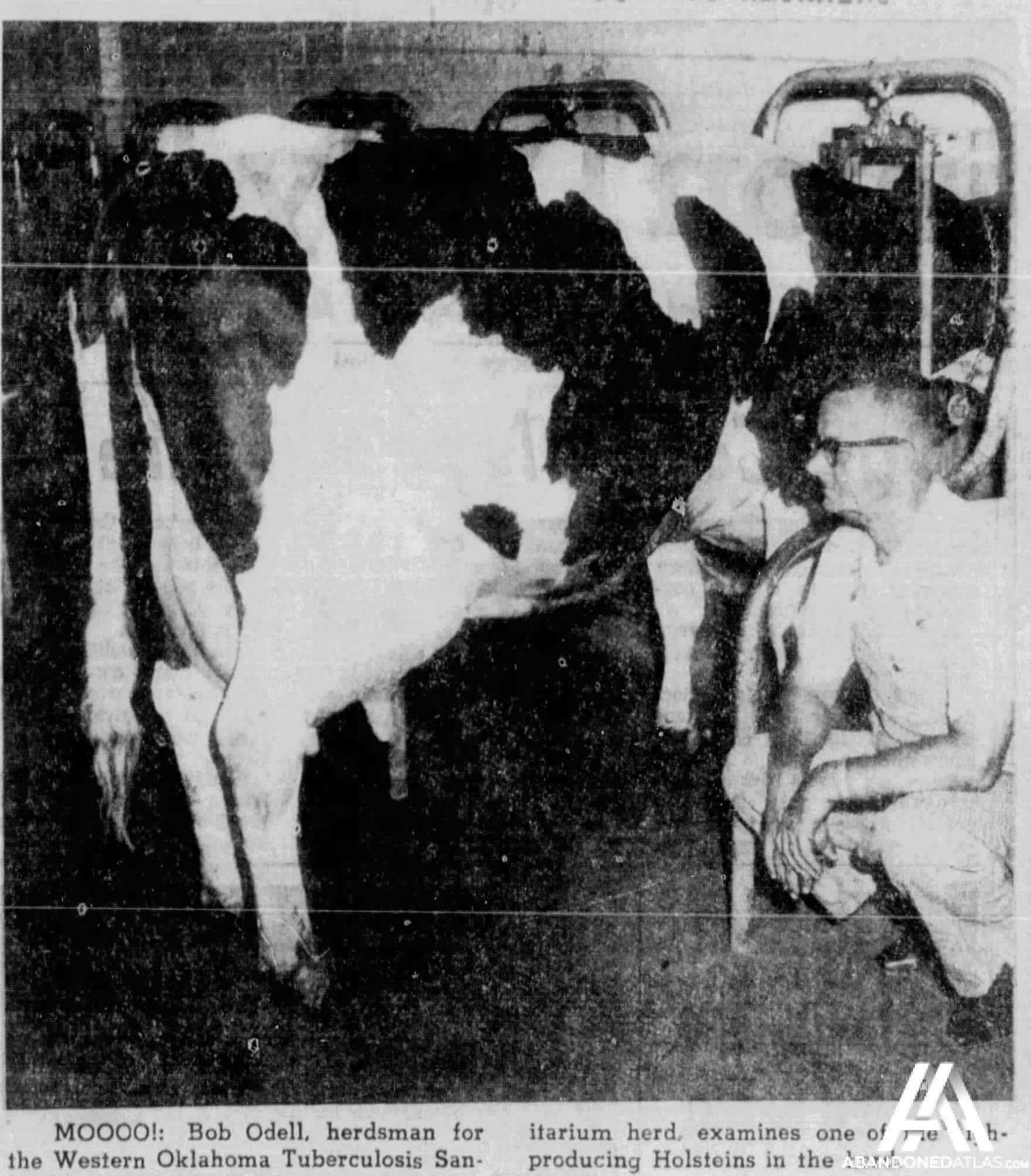 Throughout the 1950s and ’60s, Bob Odell served as the herdsman and then worked his way up to farmer superintendent, overseeing all of the operation, including the dairy. Even at a time when milk production was experiencing a dull period, the WOTS herd stood out with roughly 2,00 pounds of milk per cow per lactation period from 1956-1961. They were known as some of the best in the country.
What’s to blame? Well Bob Odell had become highly skilled in the replacement and selection of heifers from high-producing dams to ensure high numbers. From 1957-1960 they managed to increase their averages from 15,350 pounds of milk per cow to 17,330, along with 515 pounds of butterfat being increased to 604 pounds.
The dairy and the entire farm operations have been gone for quite some time now. The dairy barn that once greeted the dairymen good morning is now a reminder of times past. It serves as a storage container of memories, housing the old cornerstones of buildings long gone, signs that are no longer and the stalls where cows once stood.
This is a partially active facility and private property with 24/7 surveillance and security patrol. Anyone who attempts to enter the grounds without permission will be prosecuted to the fullest extent.
Gallery Below of Western Oklahoma Tuberculosis Sanitorium


HISTORY
https://www.newspapers.com/image/883145372/?match=1&terms=%20western%20oklahoma%20tuberculosis%20
https://www.newspapers.com/image/611468950/?match=1&terms=%20western%20oklahoma%20tuberculosis%20
https://www.newspapers.com/image/607984773/?match=1&terms=%20western%20oklahoma%20tuberculosis%20
https://www.newspapers.com/image/607763768/?match=1&terms=%20western%20oklahoma%20tuberculosis%20
https://www.newspapers.com/image/699410742/?match=1&terms=%20western%20oklahoma%20tuberculosis%20
https://www.newspapers.com/image/700069118/?match=1&terms=%20western%20oklahoma%20tuberculosis%20
https://www.newspapers.com/image/661920496/?match=1&terms=%20western%20oklahoma%20tuberculosis%20
[Photograph 2012.201.B0266.0338], photograph, March 22, 1932; (https://gateway.okhistory.org/ark:/67531/metadc338493/m1/1/?q=western%20tuberculosis: accessed March 25, 2025), The Gateway to Oklahoma History, https://gateway.okhistory.org; crediting Oklahoma Historical Society.
[Photograph 2012.201.B0266.0344], photograph, May 10, 1930; (https://gateway.okhistory.org/ark:/67531/metadc359997/: accessed March 26, 2025), The Gateway to Oklahoma History, https://gateway.okhistory.org; crediting Oklahoma Historical Society.
https://www.google.com/books/edition/Report_of_the_Commissioner_of_Charities/9ZlMAQAAMAAJ?hl=en&gbpv=1&dq=western+tuberculosis+hospital+clinton+oklahoma&pg=PA8&printsec=frontcover
https://digitalprairie.ok.gov/digital/collection/okresources/id/55062/rec/49
https://www.newspapers.com/image/838244522/?match=1&terms=nurses%20station%20western%20oklahoma%20tuberculosis%20sanitorium
https://www.newspapers.com/image/825870974/?match=1&terms=nurses%20station%20western%20oklahoma%20tuberculosis%20sanitorium
https://www.newspapers.com/image/825870142/?terms=nurses%20station%20western%20oklahoma%20tuberculosis%20sanitorium
https://www.newspapers.com/image/748149978/?match=1&terms=%22colored%20ward%22%20western%20oklahoma%20tuberculosis%20
https://www.google.com/books/edition/Report_of_the_Commissioner_of_Charities/9ZlMAQAAMAAJ?hl=en&gbpv=1&dq=western+tuberculosis+hospital+clinton+oklahoma&pg=PA8&printsec=frontcover
https://www.newspapers.com/image/900180516/?match=1&terms=%22colored%20ward%22%20western%20oklahoma%20tuberculosis%20
https://digitalprairie.ok.gov/digital/collection/okresources/id/55085/rec/49
https://digitalprairie.ok.gov/digital/collection/okresources/id/55019/rec/29
https://digitalprairie.ok.gov/digital/collection/okresources/id/55049/rec/37
https://digitalprairie.ok.gov/digital/collection/okresources/id/54985/rec/21
https://digitalprairie.ok.gov/digital/collection/okresources/id/54987/rec/21
https://digitalprairie.ok.gov/digital/collection/okresources/id/54961/rec/15
https://digitalprairie.ok.gov/digital/collection/okresources/id/54932/rec/8
https://www.newspapers.com/image/657328516/?match=1&terms=%22colored%20ward%22%20western%20oklahoma%20tuberculosis%20
https://www.newspapers.com/image/833550710/?match=1&terms=%22colored%20ward%22%20western%20oklahoma%20tuberculosis%20
https://digitalprairie.ok.gov/digital/collection/okresources/id/55404/rec/32
https://www.newspapers.com/image/828241509/?match=1&terms=%22colored%20ward%22%20western%20oklahoma%20tuberculosis%20
https://www.newspapers.com/image/907470063/?match=1&terms=%22south%20ward%22%20western%20oklahoma%20tuberculosis%20
NURSES HOME
https://www.newspapers.com/image/825871418/?match=1&terms=%20western%20oklahoma%20tuberculosis%20
https://www.newspapers.com/image/825870974/?match=1&terms=%22nurses%20home%22%20western%20oklahoma%20tuberculosis%20sanitorium
https://digitalprairie.ok.gov/digital/collection/okresources/id/55048/rec/37
https://digitalprairie.ok.gov/digital/collection/okresources/id/55228/rec/38
https://digitalprairie.ok.gov/digital/collection/okresources/id/55258/rec/44
https://digitalprairie.ok.gov/digital/collection/okresources/id/55282/rec/51
https://digitalprairie.ok.gov/digital/collection/okresources/id/55307/rec/6
https://digitalprairie.ok.gov/digital/collection/okresources/id/55331/rec/12
https://digitalprairie.ok.gov/digital/collection/okresources/id/55356/rec/18
https://digitalprairie.ok.gov/digital/collection/okresources/id/55380/rec/24
https://digitalprairie.ok.gov/digital/collection/okresources/id/55405/rec/32
https://digitalprairie.ok.gov/digital/collection/okresources/id/55429/rec/39
https://www.newspapers.com/image/742959731/?match=1
DAIRY BARN
https://www.newspapers.com/image/607988236/?match=1&terms=%22dairy%20barn%22%20western%20oklahoma%20tuberculosis%20
https://www.newspapers.com/image/787171745/?match=1&terms=%22cows%22%20western%20oklahoma%20tuberculosis%20
https://www.newspapers.com/image/787171745/?match=1&terms=%22cows%22%20western%20oklahoma%20tuberculosis%20
https://www.newspapers.com/image/602717082/?match=1
https://www.newspapers.com/image/743515248/?match=1&clipping_id=172399417
https://digitalprairie.ok.gov/digital/collection/okresources/id/59205/rec/19
If you wish to support our current and future work, please consider making a donation or purchasing one of our many books. Any and all donations are appreciated.
Donate to our cause Check out our books!